











Continuous Discovery Keeps Services Relevant
Keep learning close to the work
Discovery is most useful when it runs alongside delivery and turns customer evidence into small, testable product decisions.
Make discovery a regular team habit rather than a phase that ends before development begins. Speak with customers, support teams, operators, and sales people every week or sprint. Observe real workflows, review requests and failures, and compare what people say with what they actually do.
Frame opportunities around outcomes and constraints. A request for a new feature may point to unclear information, a broken handoff, missing permissions, or a policy problem. Understanding the underlying need helps the team test a smaller solution before committing to a large build.
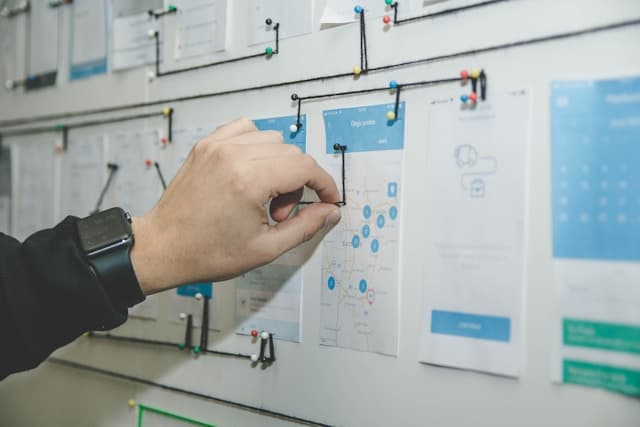
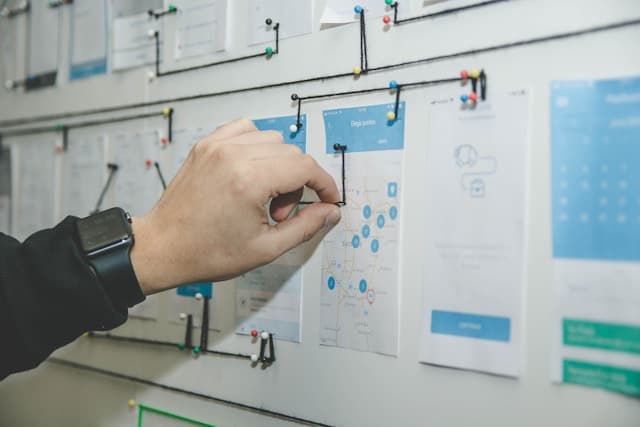
Use prototypes and thin slices to learn quickly. A sketch, clickable flow, or working vertical slice can reveal confusing language, missing business rules, and operational dependencies. Invite representative users to complete realistic tasks and capture where they hesitate or invent workarounds.
Connect discovery to delivery planning. Keep assumptions visible, define what evidence would change the direction, and split uncertain work into experiments or spikes. Validate technical feasibility, data availability, accessibility, and support impact alongside desirability.
After launch, continue the conversation. Review adoption, task completion, quality, support needs, and qualitative feedback to decide what to improve next. Continuous discovery helps services stay useful because the team keeps learning from the people and conditions the product is meant to serve.
Keep a balanced research rhythm. Interviews explain motivations, observation reveals workarounds, analytics shows scale, and support conversations reveal recurring pain. Use more than one source before treating a request as a product direction. Include people who are new, highly experienced, successful, and struggling so the team does not optimize only for the easiest users to reach.
Close the loop with participants and with the wider team. Share what was learned, explain which ideas will be tested, and record why other ideas are being deferred. After a change ships, return to the people who described the problem and ask whether the new service actually improved their work. Discovery creates trust when it leads to visible learning and better decisions.
Protect discovery time by making it part of normal planning. A small research task, prototype, or technical investigation can prevent a much larger investment in the wrong direction. Keep a lightweight decision record with the evidence, assumptions, and unresolved questions. This helps new team members understand why the product took its current shape and where further learning is still needed.